The Wellington Effect on Wellington Home Values
Key takeaways
- The key deal in Wellington's approval: housing on the old Equestrian Village grounds cannot be built until the replacement barns and competition facilities are completed and approved (Dressage News, March 2026).
- A town center, hotel and destination golf course raise the ceiling on nearby resale pricing well before opening day.
- Wellington is transitioning from seasonal equestrian town to year-round luxury market anchored by permanent infrastructure.
- Wellington's winter equestrian season creates seasonal demand that few other Palm Beach County markets have, both for sales and for high-rate seasonal rentals near the showgrounds.
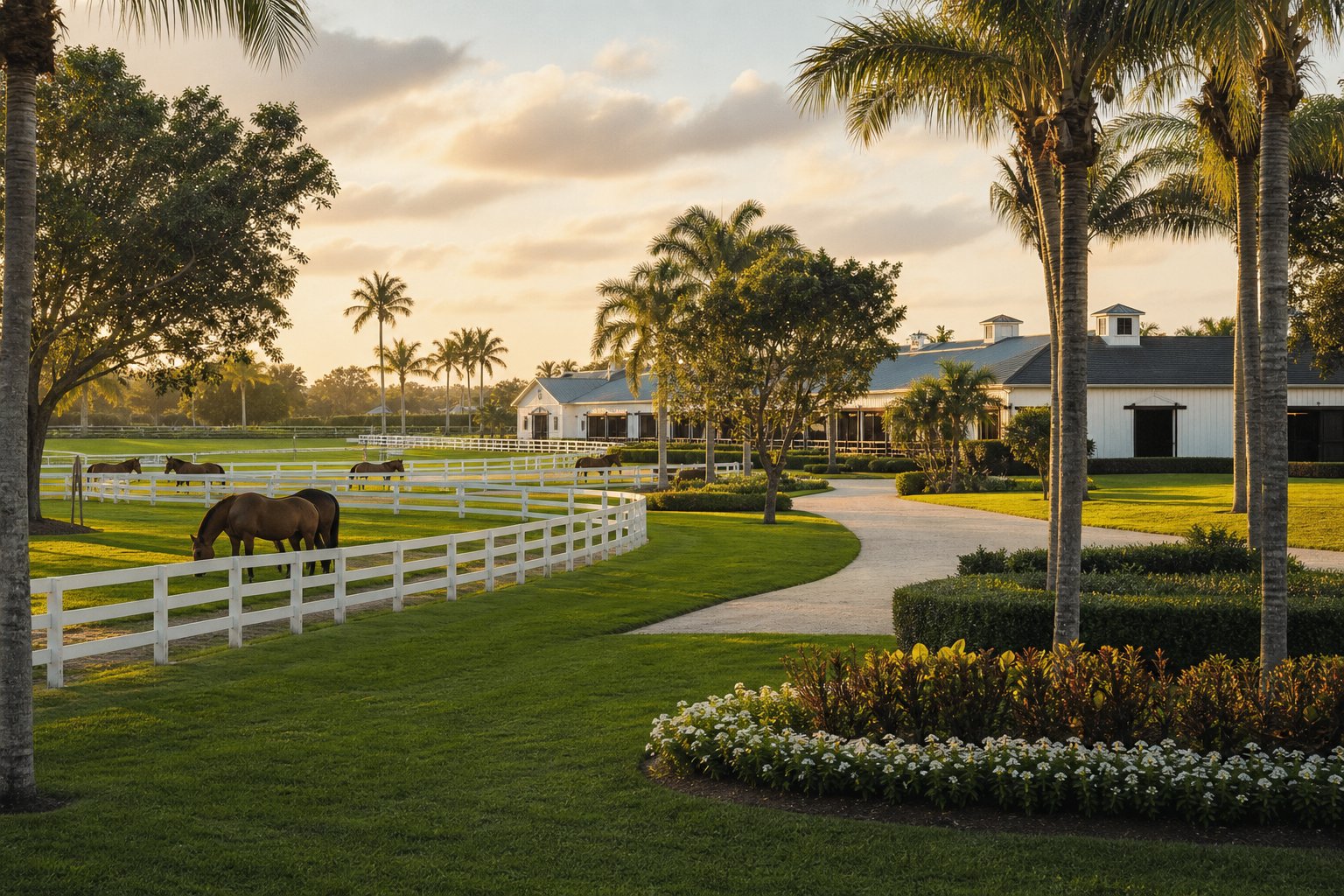
Wellington has spent forty years as the winter capital of the horse world. What is being built there right now is something different: a privately developed town-within-a-village that will change what "Wellington real estate" means by 2028. If you own a home there — or are deciding whether to buy one — here is what is actually approved, what is under construction, and what it historically does to surrounding values.
What is being built
The Wellington (Wellington Lifestyle Partners): a 400-acre ultra-luxury residential and private club development, fully permitted, which broke ground in March 2026. Approved scope includes:
- 253 private residences across The Wellington North and The Wellington South, sited in the village's equestrian preserve
- A walkable town center ("The Marketplace") with retail, restaurants, office space and a luxury hotel/condo component
- A championship golf course designed by David McLay Kidd
- New equestrian facilities — a new showgrounds already welcoming international competition, with a fifth barn and permanent spectator seating underway at Wellington International
Target debut: 2028 (CBS12, April 2026). Separately, Related Ross won county approval in February 2026 for a large new community nearby — institutional capital is treating this corridor as a decade-long bet.
The mechanism: why big amenity projects move values
The key deal in Wellington's approval: housing on the old Equestrian Village grounds cannot be built until the replacement barns and competition facilities are completed and approved (Dressage News, March 2026). That construction-sequencing detail matters — it means the equestrian economy is contractually protected, not displaced.
For surrounding owners, projects of this type historically act on prices through three channels:
- Amenity premium. A town center, hotel and destination golf course raise the ceiling on nearby resale pricing well before opening day.
- Comp migration. 253 new ultra-luxury residences reset the top of the Wellington comp stack; appraisers and buyers re-anchor.
- Land scarcity signal. Building inside the equestrian preserve, with permits this hard to win, tells the market the supply of similar land is effectively closed.
The countervailing force is construction-era friction: traffic, noise, and buyer hesitation within the immediate radius until 2028.
Who wins, who should be careful
- Existing owners near the preserve: likely beneficiaries; do not sell into construction-phase pricing without a data-backed view of post-completion value.
- Equestrian buyers: the protected showgrounds make Wellington's horse economy more durable, not less.
- Estate sellers and personal representatives: if you are settling an estate that includes Wellington property, the 2026-2028 window is exactly when "sell now vs. sell at completion" deserves a real analysis, not a default.
The bottom line
Wellington is transitioning from seasonal equestrian town to year-round luxury market anchored by permanent infrastructure. The right move depends on which side of the 2028 line your timeline sits on.
Milestones cited: [CBS12/Dressage News/oftmw/TRD/SFBJ, 2026-08-18].
Related
Questions and Answers
Does a large new development raise or lower nearby home values?
Historically both, in sequence. During construction, nearby owners see traffic, noise and uncertainty, and resale can soften. Once amenities open and the development sets a higher price benchmark, surrounding values usually benefit from the association. The timing of a sale matters as much as the location: selling mid-construction is the weakest moment.
How does the equestrian season affect Wellington home values?
Wellington's winter equestrian season creates seasonal demand that few other Palm Beach County markets have, both for sales and for high-rate seasonal rentals near the showgrounds. Proximity to the venues, trailer access and barn or paddock rights drive value in ways square footage does not explain, and pricing an equestrian property against ordinary suburban comparables is the most common valuation error here.
Should I sell my Wellington home before or after the new development opens?
It depends on what your property competes with. If the development will sell homes similar to yours, going to market before its inventory opens avoids competing with a builder who can offer incentives. If your property is different in kind, waiting to be near an opened amenity can help. This needs a look at your specific street and price band, which is what we do in a hand-prepared market analysis.
See what your home is worth
No instant estimate can read a renovation, a view or a lot line. Tell us about the property and Gia Freer, our Broker of Record, prepares a written opinion of value by hand from current BeachesMLS sales - within one business day, with the sales attached. See what your home is worth.